Opinion: Leadership, vision, and infrastructure pillars of Cambodia-China relations
 Opinion: Leadership, vision, and infrastructure pillars of Cambodia-China relations
Khmer Times | In 2025, the Cambodia–China cooperation remains one of the most dynamic and lasting bilateral alliances in Southeast Asia. This collaboration, founded on mutual political trust, linked development objectives, and a shared regional vision, has evolved from conventional diplomacy into a strategic cooperation with significant ramifications.
The leadership transitions and changing economic environment over the past two years have not only maintained but also intensified bilateral relations. Under the leadership of Prime Minister Hun Manet and President Xi Jinping, the two countries have reaffirmed their comprehensive strategic partnership. In 2025, the Cambodia–China relationship is characterised by a robust amalgamation of political allegiance and developmental pragmatism, driven by significant initiatives such as the Techo Funan Canal and the construction of new international airports that are transforming Cambodia’s national infrastructure.
Generational transition, enduring trust
The basis of Cambodia–China ties was established decades ago by King Father Norodom Sihanouk and Premier Zhou Enlai. This heritage was reinforced during the administration of former Prime Minister Hun Sen, who cultivated an “ironclad friendship” with China for nearly four decades. Today, Prime Minister Hun Manet, representing a new generation of Cambodian leadership, has assumed office with a definitive message: continuity and innovation.
Since assuming office in August 2023, Prime Minister Hun Manet has emphasised on honouring his father’s legacy and navigating the complex dynamics of contemporary geopolitics. During a bilateral conference in 2024, he asserted, “China continues to be a priority development partner and a longstanding ally of Cambodia,” underlining Beijing’s pivotal role in Cambodia’s foreign policy. President Xi characterised Cambodia as “a paradigm for China’s diplomatic relations with developing nations” (Xinhua, 2024).
Strategic infrastructure: Signs of a common goal
Few bilateral cooperation in the region are as focused on projects as the Cambodia-China connection. In the last 10 years, Beijing has emerged as Cambodia’s foremost foreign investor, principal provider of concessional loans, and significant infrastructure developer. In 2025, this trend has not only persisted but also expanded into new sectors and locations within the Kingdom.
Techo Funan Canal project
The Techo Funan Canal, certainly the most ambitious project in recent history, has garnered both national and international interest. Construction commenced in mid-2024 to build the 180-kilometre canal linking the Mekong River system directly to the Gulf of Thailand through Cambodian territory. Its strategic importance is substantial: it diminishes Cambodia’s reliance on Vietnamese ports, improves domestic logistics, and establishes the nation as a regional transport centre.
The $1.7 billion initiative, partially Chinese-funded and carried out by Chinese construction companies, is expected to require four years for completion. Despite apprehensions expressed by several downstream governments about transboundary environmental implications, both Cambodia and China have upheld the canal’s legality and transparency, referencing Cambodia’s sovereign development rights and dedication to sustainable execution.
For Mr Hun Manet’s government, the canal is not merely infrastructure but also a declaration of autonomy, modernity, and a sustained economic strategy.
New international airports: Connectivity and investment
Two more projects illustrate the scale and aspirations of Cambodia–China collaboration:
1) The Siem Reap–Angkor International Airport commenced operations in 2023, accommodating seven million passengers annually. It is the largest and most sophisticated airport in Cambodia, enhancing tourism and commerce in the northern districts.
2) The Techo International Airport, situated near Phnom Penh, is presently under construction with support from the China Development Bank. Upon completion, it is anticipated to accommodate 13 million people per year, thereby establishing Phnom Penh as a pivotal aviation and logistical hub in mainland Southeast Asia.
These initiatives exemplify Mr Hun Manet’s development-oriented leadership and correspond with China’s Belt and Road Initiative (BRI), which is currently transitioning to a phase of “high-quality and sustainable development”.
Sihanoukville Special Economic Zone
A vital part of the collaboration is the Sihanoukville Special Economic Zone (SSEZ), a premier collaborative initiative between Cambodian and Chinese businesses. The SSEZ has evolved into a flourishing industrial centre, with over 170 active enterprises and employing more than 30,000 individuals. In 2025, further expansion phases will commence, featuring logistics centres and vocational training sites designed to enhance local employment and export capabilities.
Political and security cooperation: Strengthening strategic alignment
Although infrastructure captures substantial attention, strategic trust constitutes the foundation of Cambodia-China relationships. Both governments participate in regular political discussions, notably the Cambodia-China Intergovernmental Coordination Committee, which aligns cooperation across several sectors.
Military and security cooperation has also increased. The yearly Golden Dragon military exercises, last conducted in March, encompass collaborative training focused on counterterrorism, cybersecurity, and humanitarian response. China persists in supplying military equipment and training, but Cambodia reaffirms the constitutional position against foreign military bases, addressing apprehensions on the refurbishment of Ream Naval Base with Chinese support.
Prime Minister Hun Manet has emphasised that Cambodia’s security partnerships aim to strengthen national defence capabilities rather than to further foreign strategic aims. Nonetheless, the strengthening defence relations indicate a developing trust between Beijing and Phnom Penh at both leadership and institutional tiers.
Human capital and soft power: Investing in the future
A significant aspect of the Cambodia-China collaboration is the substantial investment in human resources, education, and cultural exchange.
China continues to be the predominant provider of scholarships for Cambodian students, with thousands enrolled in Chinese universities for the 2024–2025 academic year. Confucius Institutes and Chinese-language programmes are proliferating in Cambodian secondary and tertiary educational institutions, preparing a new cohort with the competencies necessary for participation in bilateral commerce, diplomacy, and research.
Initiatives targeting youth, such as the Cambodia-China Student Dialogue 2025, the ASEAN-China Young Leaders Forum, and bilateral innovation challenges, are assuming an increasingly significant role. A Cambodian university student recently stated in a conference that “China’s development provides a model for us to analyse and adapt, not to replicate, but to inspire our own trajectory.” These forums enable prospective leaders to investigate collaboration in domains such as climate change, digital economy, and entrepreneurship.
Tourism is experiencing a resurgence following the pandemic. With the reinstatement of direct flights and the establishment of visa facilitation agreements, the influx of Chinese tourists is anticipated to exceed pre-2020 figures by the conclusion of 2025. This bolsters Cambodia’s service sector and strengthens interpersonal connections.
Challenges and strategic caution
Cambodia’s increasing dependence on China has ignited both domestic and international discourse, notwithstanding the apparent advancements. Challenges encompass:
1) Debt sustainability: Although the majority of Chinese loans are concessional, analysts caution against possible long-term debt liabilities.
2) Environmental and land concerns: Significant infrastructure initiatives have raised inquiries regarding land acquisition procedures and ecological consequences, particularly among rural communities.
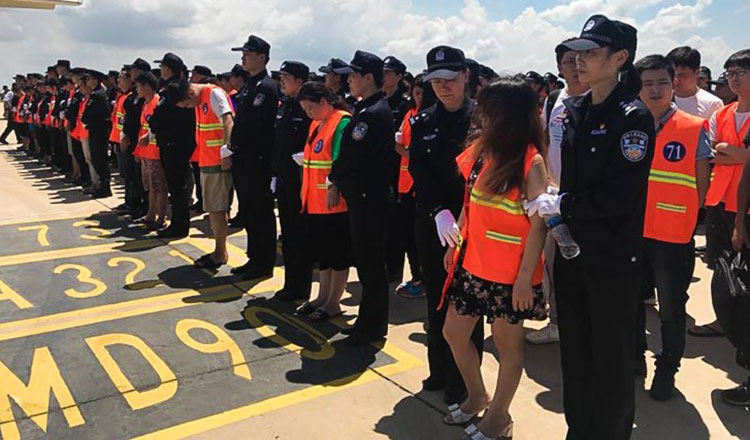
3) Illegal activities and labour concerns: Specific Chinese investments have been associated with illegal operations (such as telecommunications fraud) and breaches of labour rights. The Hun Manet administration has intensified regulatory enforcement and enhanced cross-border collaboration to tackle these issues.
4) Geopolitical pressures: Cambodia’s affiliation with China has attracted examination from Western countries. The leadership must equilibrate engagement with Beijing while maintaining opportunities for diversified partnerships with ASEAN, Japan, South Korea, India, and the United States.
The Cambodian government has commendably maintained a multi-vector foreign policy, attracting investment from non-Chinese entities, enhancing involvement in ASEAN activities, and broadening economic diplomacy throughout Asia and Europe. In 2025, Cambodia entered into new investment agreements with Korea’s KOTRA and Japan’s JICA for initiatives in smart agriculture and sustainable urban development.
Outlook: A shared future and Vision 2030
Cambodia and China are poised to enhance collaboration in developing sectors such as the digital economy, green energy, agricultural modernisation, and smart logistics. The Digital Silk Road is emerging as a new frontier, with Chinese enterprises aiding with Cambodia’s e-governance and financial technology systems.
As Cambodia advances towards its Vision 2030 (to achieve upper-middle-income status) and Vision 2050, China’s developmental expertise and financial assistance will be essential. Similarly, China regards Cambodia as a dependable ally in promoting its Global Development Initiative and Global Security Initiative, which seek to transform global collaboration in a non-Western framework.
In 2028, the two nations will commemorate the 70th anniversary of diplomatic relations, which is expected to initiate a new phase of strategic relationship. Preparations are in progress for commemorative events, bilateral summits, and the endorsement of a new decade-long cooperation framework.
Conclusion: A strategic alliance with lasting foundations
In 2025, the Cambodia–China partnership exemplifies visionary leadership, strategic trust, and diplomacy centred on infrastructure development. Prime Minister Hun Manet’s progressive leadership has maintained continuity through innovation, whereas President Xi Jinping’s development-focused diplomacy has secured Cambodia’s alignment with China’s regional influence.
Despite ongoing issues related to governance, transparency, and dependency, the collaboration is yielding concrete results such as new airports, canals, industrial zones, and digital platforms.
For Cambodia, China transcends mere financial support; it serves as a collaborator in realising national aspirations. For China, Cambodia represents not merely an ally but a trusted confidant at the core of ASEAN.
As both nations embark on a new phase of their collaboration, the narrative will be influenced not only by diplomatic strategies but also by the ambitions of the youth, the foresight of leadership, and the achievements of collaborative progress.
Cambodia must maintain openness, effective governance, and environmental sustainability in all Chinese-funded infrastructure initiatives. Implementing this will optimise long-term national advantages and maintain the strategic independence crucial for a robust and esteemed foreign policy.